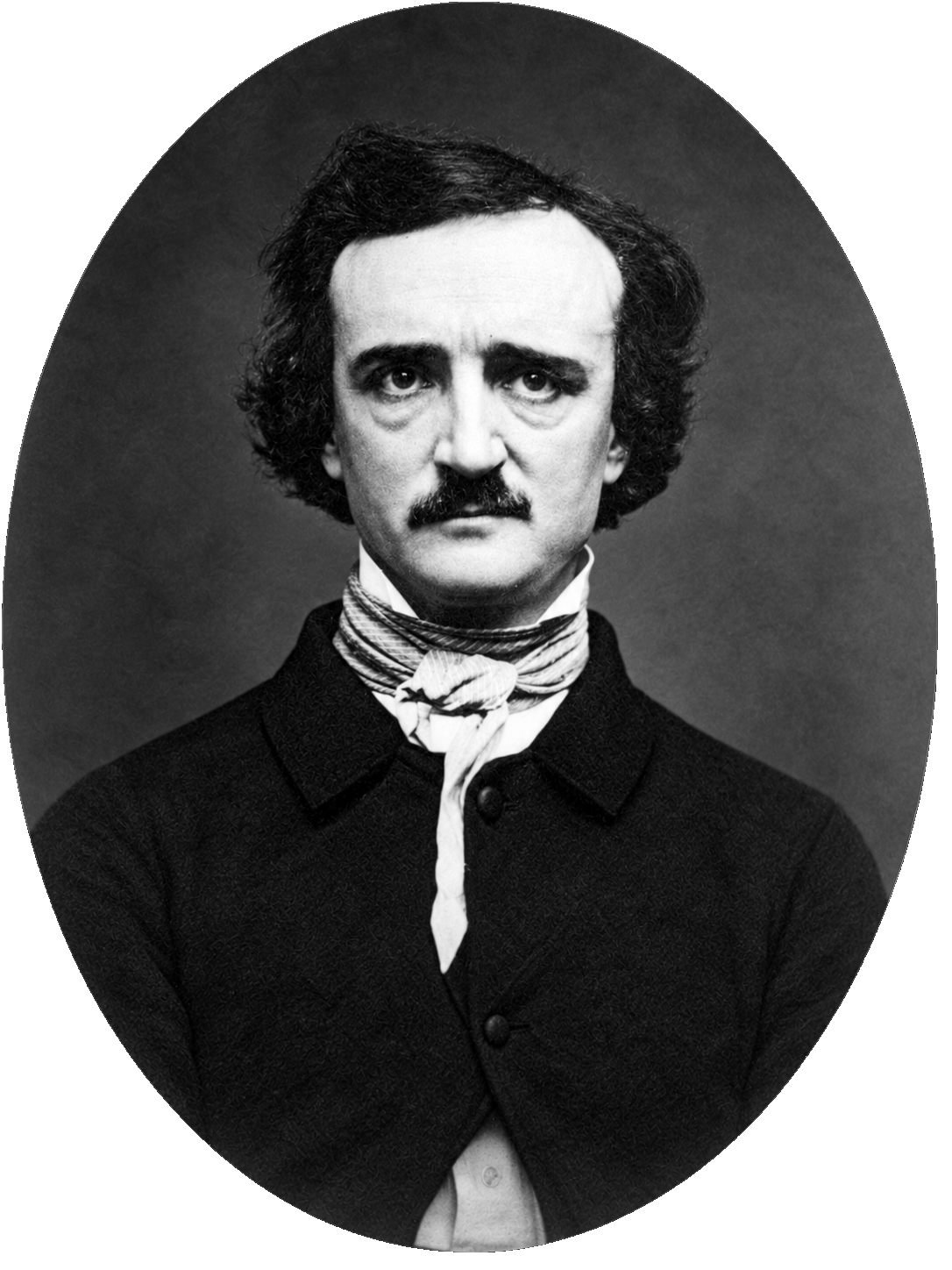
A cipher on a scrap of parchment, an ancestral house on the edge of collapse, a letter hidden in plain sight: Poe makes the smallest detail carry the weight of a whole story. His tales lead reason and terror into the same room.
There are mysteries which the keenest intellect may unravel, and others which lie buried so deeply within the human soul that reason itself recoils before them.
Poe's working world was the American magazine: a place for stories, reviews and argument, and a precarious source of income. The poet of The Raven was also an exacting editor. His fiction brings that discipline to extremes of fear, speculation and analytical pursuit.
Explore the life and work
Origins and early years
Born in Boston to actors, Poe lost his mother in early childhood. John and Frances Allan brought him up in Richmond; schooling in Britain and a brief period at the University of Virginia widened the geography of his youth.
The course of a life
In 1827, the year of Tamerlane and Other Poems, he enlisted in the United States Army. He rose to sergeant major before leaving for a different course. West Point followed in 1830; court-martial ended his time there in 1831.
Editing took him through the Southern Literary Messenger, Burton's Gentleman's Magazine and Graham's Magazine. In New York he briefly owned the Broadway Journal. The Raven brought fame in 1845; the business of literature remained insecure. Virginia died in 1847, and Eureka appeared the following year.
The literary work
The twelve tales collected in 1845 hold several kinds of invention together. Dupin follows the relations between facts; the narrator of The Black Cat attempts to account for his own violence; the house of Usher binds landscape, sound and apprehension into a single pressure. The methods differ, but every selected detail matters.
Read in their original order, the stories move between ciphers, catastrophe, speculative dialogue and the crowded city. This is a more various Poe than a gallery of Gothic horrors alone can suggest.
The legacy
Poe's stories make reading an active contest with appearances. We listen to a voice, weigh its evidence and discover how readily attention can be directed elsewhere. The attraction lies as much in that controlled movement as in the revelation at the end.
A life in dates
Born in Boston on 19 January.
Tamerlane and Other Poems; enlistment in the United States Army.
Cadet at West Point; court-martial ends his attendance.