
Life and work
Henry Creswicke Rawlinson
1810–1895
Major-General Sir Henry Creswicke Rawlinson, Bart., K.C.B.
Soldier, envoy and decipherer of Behistun, who warned of the Russian advance on India.
Major-General Sir Henry Creswicke Rawlinson, Bart., K.C.B. (1810–1895), served in Persia and Afghanistan, copied the trilingual inscription of Darius on the rock of Behistun and, as a member of the Council of India, argued in 1875 that the security of India was being decided far beyond its frontier.
Return to the editions ↓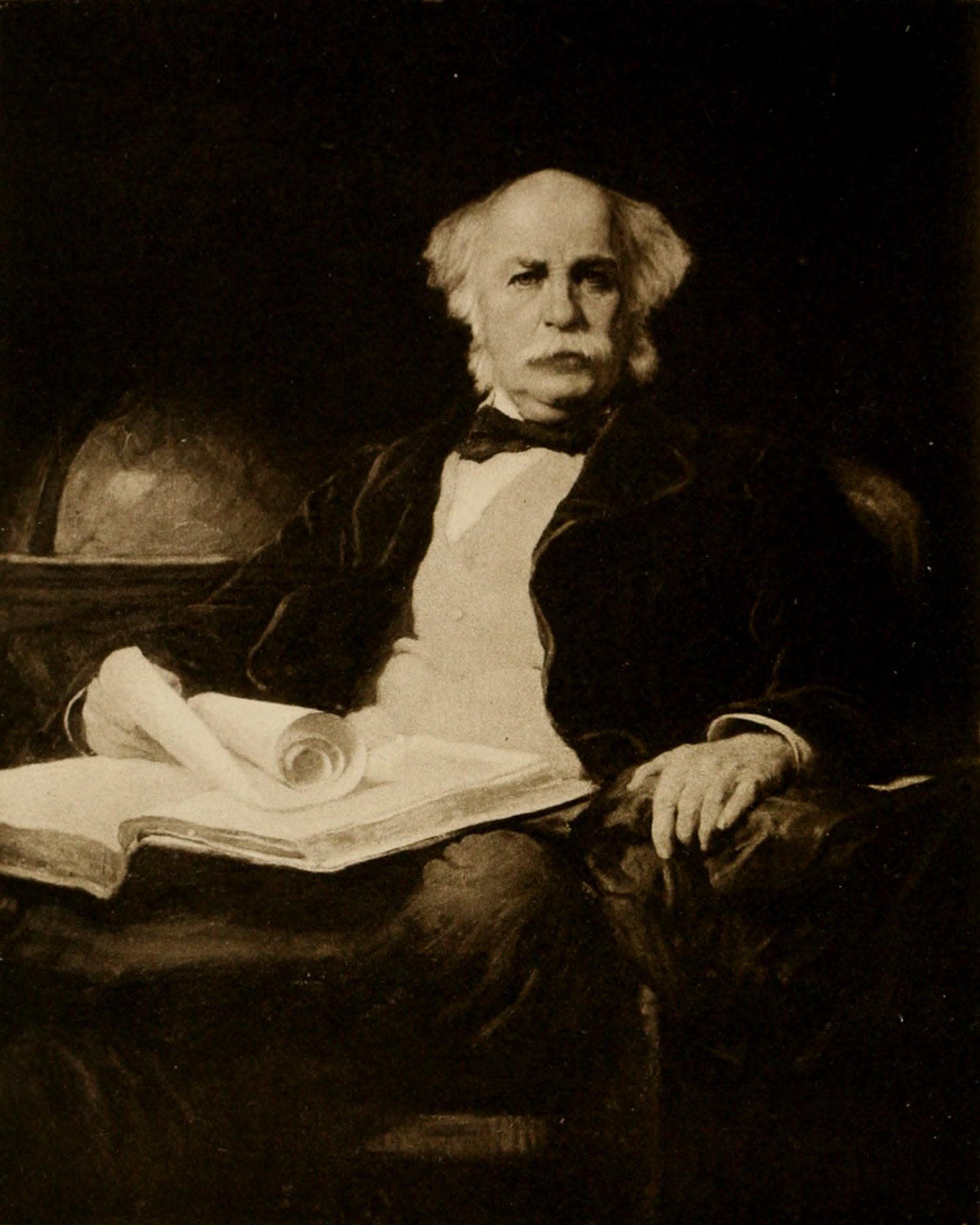
English editions in preparation
England and Russia in the East: A Series of Papers on the Political and Geographical Condition of Central Asia. An English AETERNUS edition of the first printing of 1875 is in preparation in the Green Series.
Publication details will follow after approval.
Life and work
A life in context
His book collects the papers in which a soldier-political officer, scholar and member of the Council of India set out the Russian advance across Central Asia, the position of Persia and Afghanistan, and the measures he thought Britain would have to take.
Honours and distinctions
- Order · 1856Order of the Bath · Knight Commander (K.C.B., civil division)
Conferred on 4 February 1856, after his return from Baghdad.
- Title · 1891Baronet of the United Kingdom
Among the last honours conferred on him by the Crown.
Explore the life and work
Oxfordshire, Bombay and Persia
Rawlinson was born at Chadlington, Oxfordshire, on 11 April 1810. At seventeen he sailed for India as a cadet of the East India Company and landed at Bombay on 27 October 1827. He learned Persian well enough to be chosen in 1833 for the small body of Indian Army officers sent to reorganise the Shah's troops.
In Persia he commanded bodies of Persian troops, carried civil duties in the province of Kermanshah and began copying the rock inscriptions of Hamadan and Behistun. The great inscription of Darius, cut high on a cliff face, became the work of his life.
Kandahar, Baghdad, Tehran and the India Council
When relations with Persia were broken off over Herat he returned to India, and in the Afghan War of 1839–1842 he served as Political Agent at Kandahar beside General Nott. He then declined more lucrative offices and asked for the political agency at Baghdad, where he worked from 1844 to 1849 and again from 1851 to 1855 on the cuneiform records and the excavations of Assyria.
Back in England he was created a civil K.C.B. in 1856, became a director of the East India Company, entered Parliament for Reigate and sat on the first Council of India in 1858. In 1859 and 1860 he served as Envoy and Minister at Tehran, resigning when control of the mission passed from the India Office to the Foreign Office. He sat for Frome from 1865, returned to the Council of India for life in 1868 and was elected President of the Royal Geographical Society in 1871. He was created a baronet in 1891 and died in London on 5 March 1895.
The literary work
England and Russia in the East (1875) gathers papers from the Calcutta Review and the Quarterly Review with chapters prepared for the volume. Rawlinson describes the Russian advance from the Caspian towards the Oxus, the position of Persia and Afghanistan, and the measures he thought necessary for the defence of India, including the possible occupation of Herat and Kandahar and a share of the cost for the Imperial Treasury. The folding map of Central Asia, coloured under his own responsibility, belongs to the argument.
The legacy
Rawlinson insisted that an empire could lose the security of its frontiers long before an enemy crossed them, and he brought the knowledge of the frontier into the councils where its fate was decided.
A life in dates
- Born on 11 April at Chadlington, Oxfordshire
- Lands at Bombay as a cadet of the East India Company
- Persia: reorganising the Shah's troops; Kermanshah; copying the Behistun inscription
- Political Agent at Kandahar during the Afghan War
- Political Agent at Baghdad, with leave in England 1849–1851
- Civil K.C.B.
- Member for Reigate; member of the first Council of India
- Envoy and Minister at Tehran
- Member for Frome
- Council of India for life
- President of the Royal Geographical Society
- England and Russia in the East published by John Murray
- Created a baronet
- Dies in London on 5 March
Historical sources and further reading
- George Rawlinson, A Memoir of Major-General Sir Henry Creswicke Rawlinson (London: Longmans, Green, and Co., 1898), with an introduction by Field-Marshal Lord Roberts; Internet Archive scan memoirofmajorgen00rawlrich (University of California Libraries) ↗
- Internet Archive · England and Russia in the East (London: John Murray, 1875), Cornell University Library scan cu31924023001039 ↗