Blue · Economy, industry, and the titans of progress
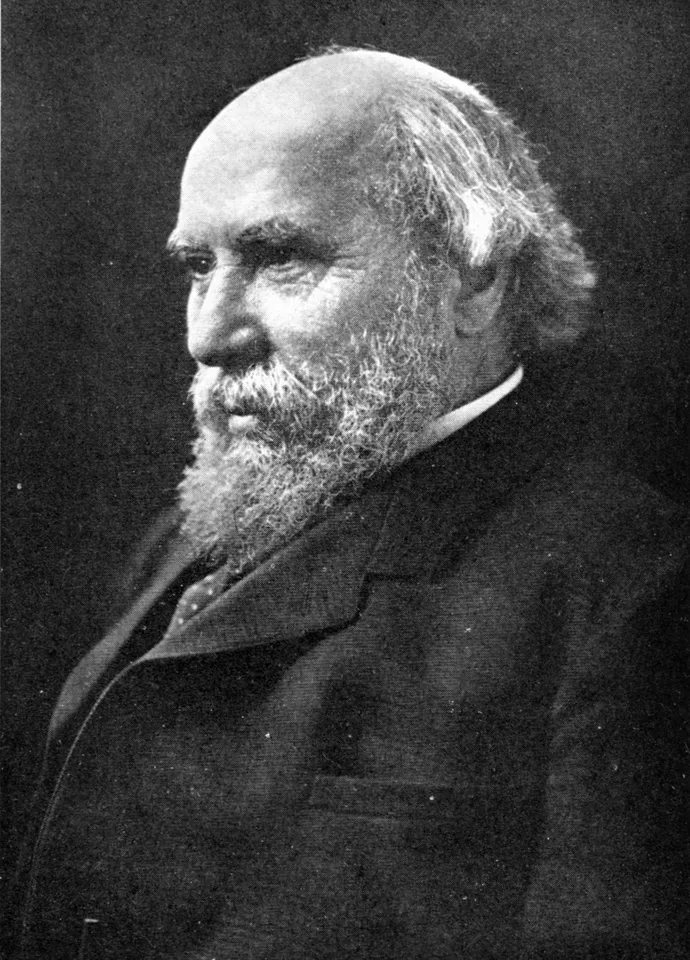
James J. Hill
1838–1916
His rails crossed a continent.
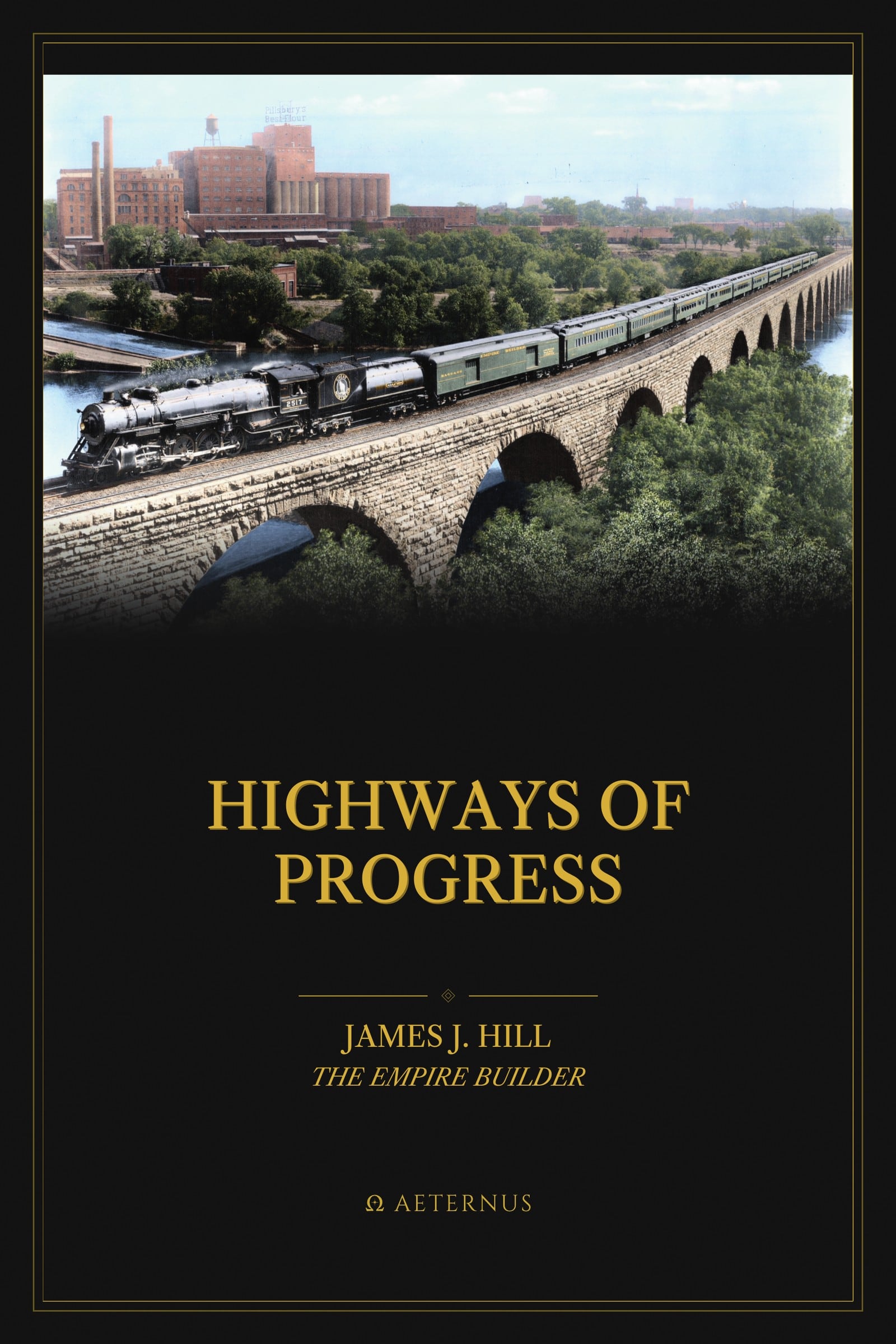
From Saint Paul he drove the Great Northern across the northern plains, through the Rocky Mountains and onward to Puget Sound. Highways of Progress (1910) is the mature statement of the man remembered as the Empire Builder.
English-language editions
 ↗
↗BLUE
James J. Hill
Published in 1910, Highways of Progress is the mature statement of the man remembered as the Empire Builder: a reflection on agriculture, commerce, irrigation, waterways, conservation, natural resources and the productive future of a continental nation.
Explore the edition →Life & context
Saint Paul and the river trade
James Jerome Hill was born on September 16, 1838, in southern Ontario, into a farming family of modest means. His father’s death while Hill was still young ended plans for further formal education and sent him into employment. In July 1856, at seventeen, he arrived in Saint Paul and began work as a shipping clerk on the Mississippi levee.
During the 1860s he moved through steamboat agencies, fuel and warehousing; in 1872 he joined Norman W. Kittson in establishing the Red River Transportation Company, and a regular through transportation service linked Saint Paul with Winnipeg. In 1867 Hill married Mary Theresa Mehegan; their son Louis would eventually succeed him at the head of the Great Northern.
The Great Northern
In 1878 Hill and his associates acquired the insolvent St. Paul & Pacific Railroad. From this distressed property arose the St. Paul, Minneapolis & Manitoba, and ultimately the Great Northern. Marias Pass furnished the crucial crossing of the Rockies; on January 6, 1893, the last rail of the transcontinental connection was laid at Scenic, Washington.
The western extension was undertaken without the federal land-grant support upon which several competing transcontinental railroads had relied. The achievement earned Hill the enduring sobriquet “Empire Builder.”
Highways of Progress
In 1901 the Great Northern and Northern Pacific jointly acquired almost all of the Chicago, Burlington & Quincy; the Northern Securities Company that followed was ordered broken apart by the United States Supreme Court in 1904. In 1907 Hill relinquished the presidency of the Great Northern but remained chairman until 1912.
In 1910 he published Highways of Progress, the mature reflections of a man whose horizon had expanded from the operation of trains to agriculture, soil, conservation, commerce, ports and capital. Hill died at Saint Paul on May 29, 1916, aged seventy-seven.
