
Life and work
Samuel Benfield Steele
1848–1919
Major-General Sir Samuel Benfield Steele, K.C.M.G., C.B., M.V.O.
Mounted Police officer, soldier and the Lion of the Yukon.
Major-General Sir Samuel Benfield Steele, K.C.M.G., C.B., M.V.O. (1848–1919), served on the Canadian frontier for more than four decades, from the first march of the North-West Mounted Police to the gold rush on the Klondike.
Return to the editions ↓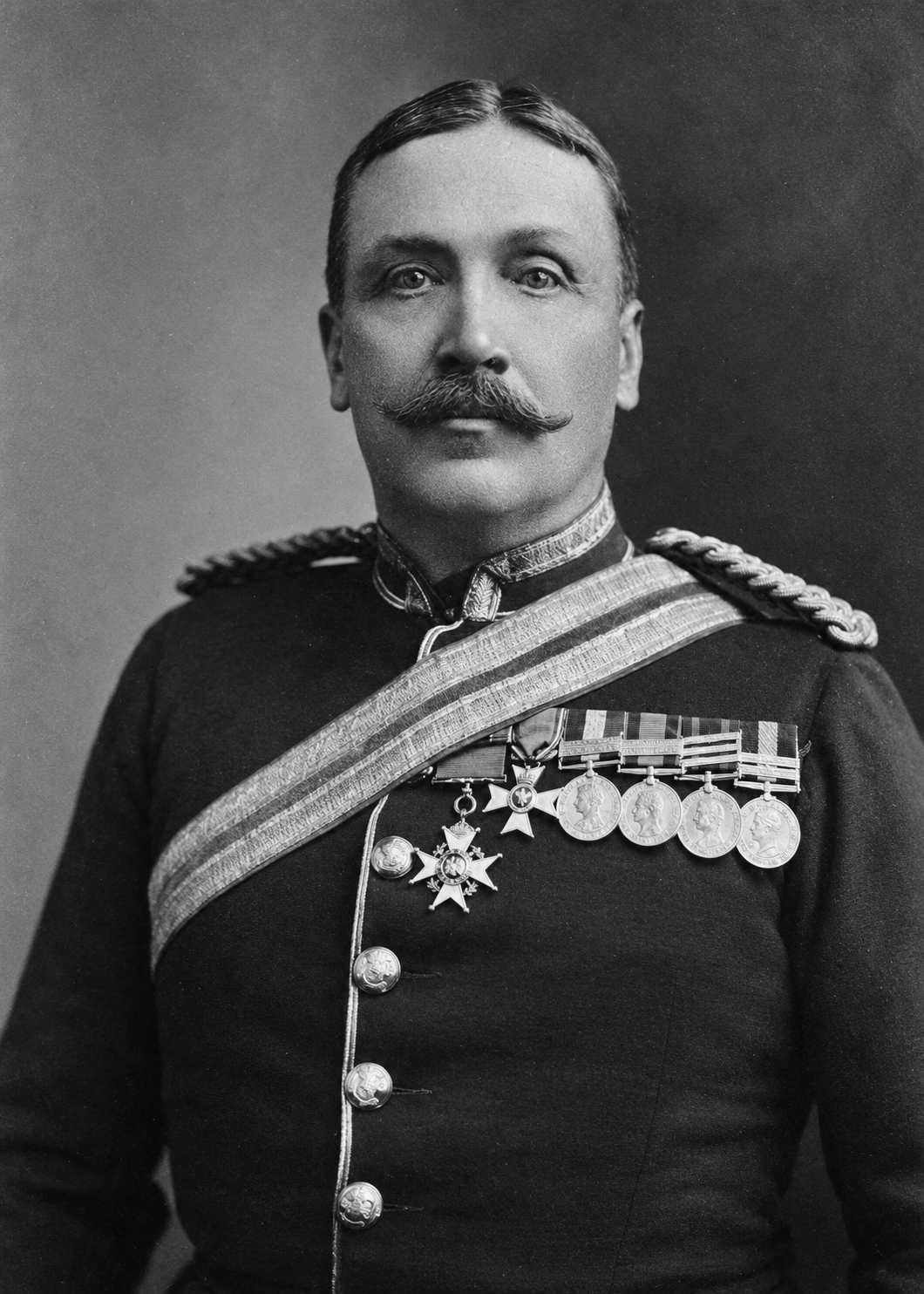
English editions in preparation
Forty Years in Canada: Reminiscences of the Great North-West, with Some Account of His Service in South Africa. An English AETERNUS edition in the Green Series is in preparation.
Publication details will follow after approval.
Life and work
A life in context
His memoir follows a policeman and soldier from the Red River and the prairies to the Yukon and South Africa, at the posts where the authority of the young Dominion had to be established in person.
Honours and distinctions
- Order · 1918Order of St Michael and St George · Knight Commander (K.C.M.G.)
Created 1 January 1918, during his command in England.
- Order · 1901Order of the Bath · Companion (C.B.)
After the South African service of Lord Strathcona's Horse.
- Order · 1901Royal Victorian Order · Member (M.V.O.)
Received in England on the regiment's journey home.
Explore the life and work
Upper Canada and the Red River
Steele was born on 5 January 1848 in Medonte Township, Upper Canada, the son of a former Royal Navy officer, Elmes Yelverton Steele. He entered the militia as a young man and in 1870 volunteered for the expedition under Colonel Garnet Wolseley to the Red River, where he first met the political and military questions of the Canadian West.
Police, Klondike and war
In 1873 he joined the newly formed North-West Mounted Police and went west with its first contingent. He kept order along the construction of the Canadian Pacific Railway and in 1885 led the mounted scouts of the Alberta Field Force in the pursuit of Big Bear; in August of that year he became superintendent.
In February 1898 he was sent to the Yukon at the height of the Klondike Gold Rush. On the passes and from September 1898 in Dawson he enforced customs, safety and order among prospectors, merchants and adventurers. The name by which the Yukon still remembers him, the Lion of the Yukon, comes from these months. He left the territory in September 1899.
In 1900 Steele commanded Lord Strathcona's Horse in South Africa and from 1901 held a divisional command in the South African Constabulary. Promoted major-general in December 1914, he commanded the 2nd Canadian Division in 1915 and then the South-Eastern District of England. He was created K.C.M.G. in 1918 and died at Putney on 30 January 1919.
The literary work
Forty Years in Canada (1915) is Steele's own account of the Great North-West, with a closing account of his service in South Africa. It is written from the marches, the isolated police posts and the head of a column, not from a distance.
The legacy
The memoir preserves the experience of a man who met Canadian history on arduous marches, in isolated posts, among the people of the frontier and at the head of his men.
A life in dates
- Born on 5 January in Medonte Township, Upper Canada
- Volunteer in the Red River expedition under Colonel Garnet Wolseley
- Joins the North-West Mounted Police; goes west with the first contingent
- Leads the mounted scouts of the Alberta Field Force; superintendent
- Commands the police in the Yukon during the Klondike Gold Rush
- Commands Lord Strathcona's Horse in South Africa
- Divisional command in the South African Constabulary; C.B. and M.V.O.
- Forty Years in Canada published; commands the 2nd Canadian Division
- K.C.M.G.
- Dies at Putney, London, on 30 January