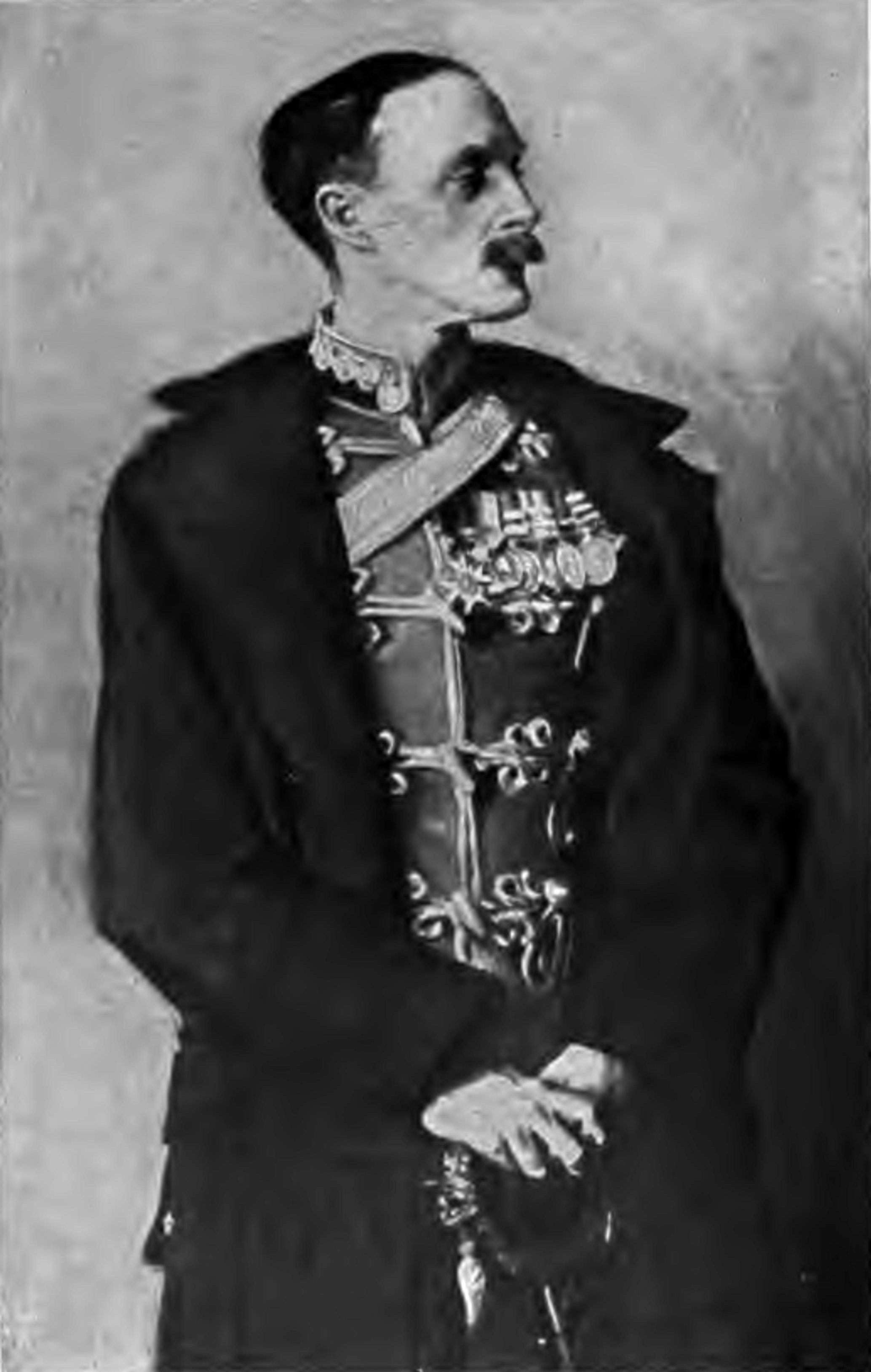
Sir Ian Standish Monteith Hamilton belonged to the generation of British soldiers whose professional lives extended across the final decades of Victorian expansion and into the industrial warfare of the twentieth century. His career was formed in the British Army of India and the imperial expeditionary service, tested upon widely separated fields and distinguished by a familiarity with war which few officers of his seniority in 1914 could rival.
General Sir Ian Hamilton’s own record of the Dardanelles expedition, March to July 1915: Volume I of the complete text of 1920, with its plates and a publisher’s apparatus.
General Sir Ian Hamilton’s own record of the last months at Gallipoli, Sari Bair, Suvla and his recall in October 1915: Volume II of the complete text of 1920, with appendices and a publisher’s apparatus.
In March 1915 Hamilton was appointed to command the Mediterranean Expeditionary Force. The assignment placed him at the centre of an enterprise in which the British Government sought to turn the course of the Great War by striking at the Ottoman Empire.
Explore the life and work
A soldier and an observer
He had served in the Afghan War, encountered the reverses and dangers of the early South African fighting, taken part in campaigns upon the Indian frontier and returned to South Africa during the great war against the Boer republics. He knew the responsibilities of command in action and the intricate relations between field officers, staffs and the higher military administration. During the Russo-Japanese War of 1904–1905 he observed the Japanese Army in Manchuria, gaining direct acquaintance with the enormous demands of warfare between modern armies.
His published account of that experience, A Staff Officer's Scrap-Book, had already established him as a soldier capable of literary observation as well as professional analysis.
The Dardanelles command
The forces under his authority represented several nations and military traditions. Their operations depended upon cooperation with an Allied fleet, upon difficult lines of communication through Mediterranean bases and upon decisions made in London while events moved with greater urgency upon the peninsula.
Hamilton maintained his belief in the possibility of success long after the difficulties had become formidable. When the August offensive failed to secure the desired decision, the conflict between his expectations and the judgement forming in London deepened. He was recalled in October 1915 and received no subsequent field command.
His military career was thus brought to its public conclusion under the shadow of an expedition whose courage and losses were unquestioned, but whose command and conception remained matters of controversy.
The Gallipoli Diary was his answer to that controversy.
The literary work
Hamilton should be read neither as the final authority upon his own vindication nor as a witness whose failure deprives him of value.
The legacy
He was the man who bore the command. His account belongs among the indispensable documents through which the history of Gallipoli must be understood.